Narrative
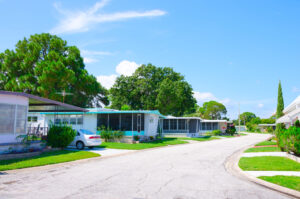
In 2024, the owners engaged Engineered Tax Services for a cost segregation analysis for a campground property in Farmington, Pennsylvania. The property, which included a home, equipment/fixtures, and buildings, was placed in service in May 2023 , with a total depreciable basis of $2,650,000.00. The purpose of the engagement was to analyze the property’s construction and acquisition costs to identify assets eligible for shorter depreciation recovery periods under IRS guidelines.
The property includes various land improvements and site features essential to campground operations, as well as several structures and personal property. Engineered Tax Services reviewed the available fixed assets, including the home, equipment, fixtures, and buildings, to determine the proper classification and cost allocation under the Modified Accelerated Cost Recovery System (MACRS).
The engineering-based analysis of a cost segregation analysis for a campground determined that 4.74% of the property qualified for a 5-year class life, 1.97% for a 7-year class life, 68.77% for a 15-year class life, and 24.53% for a 39-year class life. This case study outlines the cost segregation strategy employed to optimize tax benefits through accelerated depreciation.
Objective
The primary objective of the cost segregation study was to identify and classify all components within the $2,650,000.00 depreciable basis so that qualifying assets could be assigned shorter recovery periods under MACRS, improving the timing of allowable depreciation deductions.
Methodology
- Physical Inspection: conducting a site visit to identify and photograph specific property items and determine the nature of the project and its intended use.
- Document Review: analyzing cost data, construction documentation, and accounting records to verify and reconcile total project costs.
- Cost Analysis: applying engineering estimation methods, such as those cited from R.S. Means, to compute unit costs and reconcile total costs to the taxpayer’s records.
- Depreciation Calculation: assigning class lives and recovery methods consistent with IRS guidance (including Revenue Procedure 87-56) and grouping project items with similar class lives.
Learn More About Cost Segregation
Explore how cost segregation can help you and how it can enhance your property's profitability. Dive deeper into our strategies.
Asset Allocation
5-Year Class Life
Total Depreciation Allocation: $125,688.59 Percentage of Total Depreciable Basis: 4.74%
5-year class life property consists of tangible personal property found across the Home, Equipment/Fixtures, and Buildings assets that are eligible for a 5-year recovery period.
- Equipment and fixtures used in commercial operations
- Short-lived assets and components dedicated to specific functions
7-Year Class Life
Total Depreciation Allocation: $52,074.65 Percentage of Total Depreciable Basis: 1.97%
7-year class life property includes certain furniture, fixtures, and other specialized equipment not classified as 5-year property, allocated across the property’s assets.
- General-purpose fixtures and furnishings.
- Systems and components classified under a 7-year Asset Depreciation Range (ADR) class.
15-Year Class Life
Total Depreciation Allocation: $1,822,313.84 Percentage of Total Depreciable Basis: 68.77%
15-year class life property consists primarily of land improvements and exterior site systems, which form the largest component of the depreciable basis, allocated across the Home, Equipment/Fixtures, and Buildings assets.
- Site improvements such as paving, curbing, and lighting.
- Utility infrastructure and other land improvements qualifying for accelerated recovery.
39-Year Class Life
Total Depreciation Allocation: $649,922.92 Percentage of Total Depreciable Basis: 24.53%
39-year class life property includes structural components of the main buildings and home classified as § 1250 property, which must be depreciated over a 39-year recovery period.
- Main building structures.
- Long-term real property components of the Home asset.
Class Life Details:
Summary
The cost segregation analysis for a campground in Farmington, Pennsylvania, property identified assets eligible for shorter recovery periods and documented their allocation across 5-year, 7-year, 15-year, and 39-year categories. This engineering-based approach aligns the property’s components with appropriate MACRS class lives and provides the taxpayer with supportable depreciation schedules.
The total increase in accumulated depreciation from this study, while not explicitly provided in the summary of results, is generated by reclassifying a substantial portion of the depreciable basis—over 75%—into accelerated recovery periods of 5, 7, and 15 years.
This result improves near-term tax efficiency and supports capital planning and reinvestment decisions. The documentation prepared by Engineered Tax Services provides audit-ready support consistent with IRS guidance and accepted engineering practices.
Unlock Your Tax Savings
Discover how cost segregation can maximize your tax benefits and improve cash flow. Get started today with a free consultation.