ETS in Bloomberg – Trump’s tax overhaul solidifies write-offs of certain assets
Case Study Cost Segregation · Multifamily

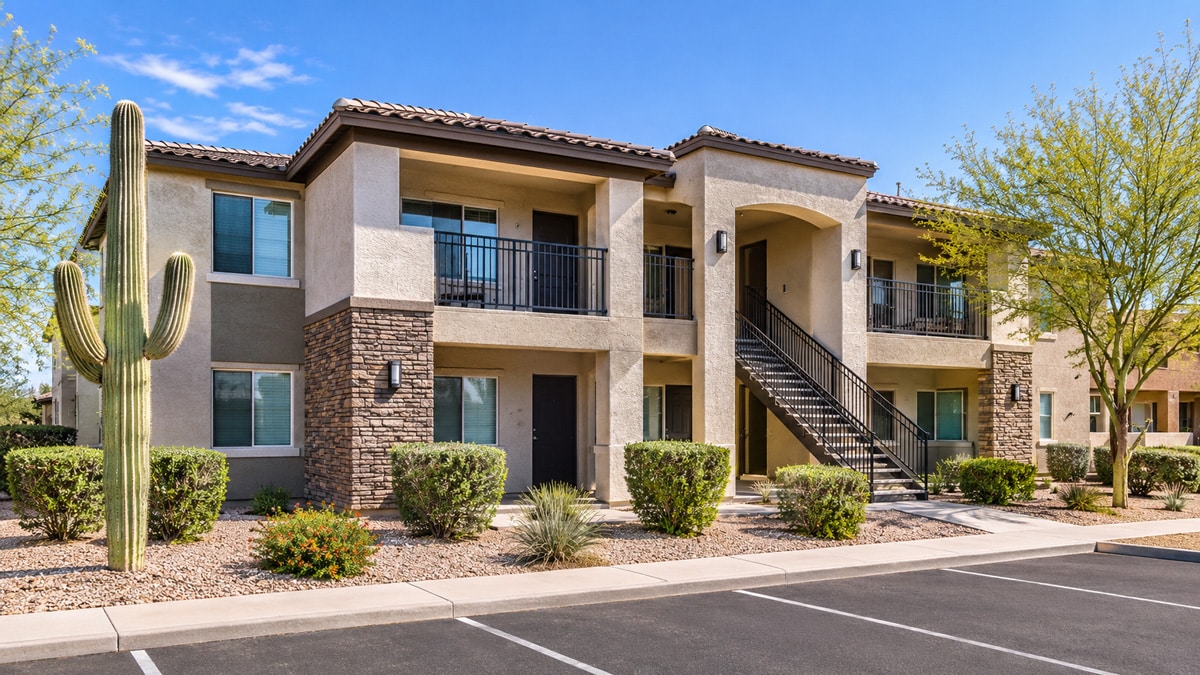
How a 70-Unit Apartment Community in Avondale, AZ Unlocked an $8.39M First-Year Deduction

The owner bought a $30.1M apartment community expecting to write it off slowly over 27.5 years. A cost segregation study let them deduct $8.39M of it in the very first year instead.
Avondale, AZ Apartments Case Study — Engineered Tax Services
The Results

Deducted in year one

$8.39M

vs. just $766,182 without a study — an 11× larger first-year write-off.

$30.1M

total purchase price (buildings + land)

32.7%

of the buildings moved to faster 5- and 15-year schedules

$10.74M

total deductions projected over the first 5 years

Where the $24.08M building value landed The $6.02M land value is excluded — land can't be depreciated.
28%
4%
67%
Moved to faster schedules: $7,870,639
$6,857,230
5-year property
$1,013,408
15-year property
$16,209,361
Stays on the 27.5-year schedule

Why $8.39M and not $7.87M? The year-one deduction also includes about $515.8K of normal first-year depreciation on the $16.21M that stays on the 27.5-year schedule.

First-year deduction: before vs. after
Without a study $766,182
With cost segregation $8,386,391

Cash now, not later. Deductions that would have trickled in over decades arrive in year one.

Bonus eligible. The faster-schedule parts qualified for up to 100% bonus depreciation.

Audit-ready. Every classification is backed by an on-site inspection and cost analysis.

The Property
A newly built, two-story apartment community — 70 units across 18 buildings — completed in 2025, acquired in 2026 and placed in service February 17, 2026.
Location
Avondale, AZ
Size
117,386 sq. ft.
Building value
$24,080,000
+ Land value
$6,020,000
= Total purchase price
$30,100,000
Only the building value can be depreciated; land can’t.
The Challenge

Without a study, the full $24.08M building value would be written off evenly over 27.5 years — the standard schedule for residential rentals. That meant only about $766,182 in deductions the first year, with the rest trickling in until the 2050s.

The owner wanted to know which parts of the community could be written off faster, backed by documentation that would hold up if the IRS ever asked.

The Solution
Engineered Tax Services (ETS) inspected the property on site and reviewed it piece by piece — unit flooring, countertops and cabinets, appliances, paving, the pool and other site improvements — rather than applying a rough percentage.

Inspect

On-site visit to document every component

Price each part

Engineering cost estimates for every component

Sort & verify

Assign each part to a 5-, 15- or 27.5-year schedule and check it all adds up

The Takeaway
Even a brand-new apartment community can hide millions in faster write-offs. Flooring, countertops, appliances and site work don’t last 27.5 years — and a cost segregation study lets the owner deduct them that way, putting cash back in their hands in year one.
Figures are deductions reported in the engineering study, not guaranteed dollar-for-dollar tax savings. Actual savings depend on each taxpayer’s situation.

Could your property qualify for faster write-offs?

Find out what a cost segregation study could uncover for your apartment community or commercial building.
Cost segregation in 60 seconds

A building isn't one thing — so it shouldn't be written off like one.

When you buy investment property, the IRS lets you deduct its cost over time (that’s depreciation). By default, a residential rental building is spread over 27.5 years — a small deduction each year.

But many parts of a building wear out much faster than its walls and roof. A cost segregation study is an engineering review that finds those parts and moves them to shorter 5- or 15-year schedules. With bonus depreciation, those faster pieces can often be deducted all at once, in year one.

5 yearsFastest
  • Laminate & carpet flooring
  • Quartz countertops & cabinets
  • Appliances, washers & dryers
15 yearsFaster
  • Asphalt paving & concrete curbs
  • Pool, pool deck & sidewalks
  • Landscaping & fencing
27.5 yearsDefault
  • Framing & drywall
  • Foundation, walls & roof
  • Core building systems
Examples drawn from this property’s engineering study. Commercial (non-residential) buildings use a 39-year default instead of 27.5.

Find services, resources, case studies, and more

Esc to close

Type or hit Enter to search

We Love Referrals!

Spread the love, share the savings
Know someone who could benefit from our specialized tax expertise? Our referral program rewards you for sharing ETS with your network.

Why Refer to ETS?