Property Overview
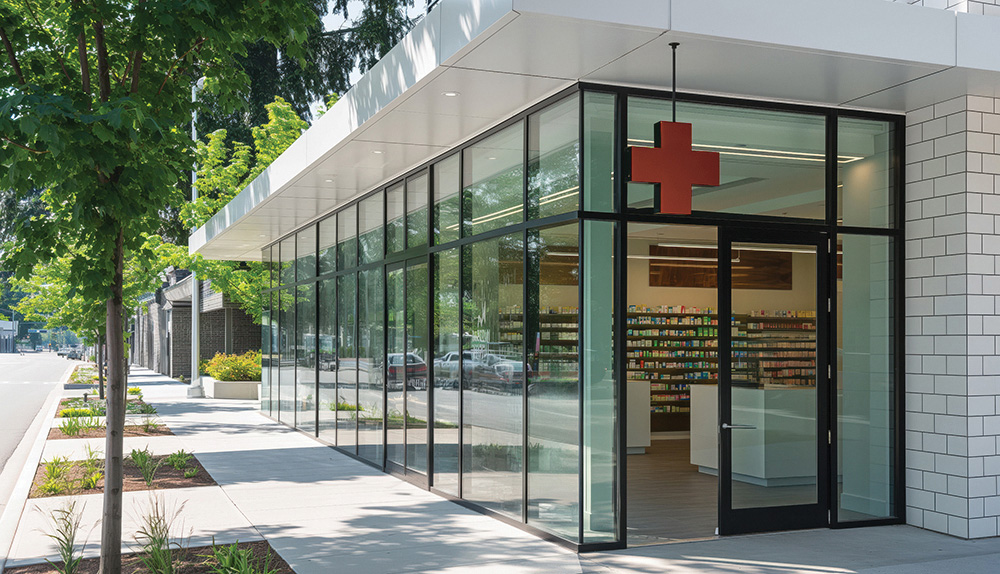
- Property Type:Retail Pharmacy
- Location:Turlock, CA
- Year Acquired:2025
- Placed in Service:November 10, 2025
- Total Depreciable Basis:$600,208.24
- Land Value:$358,744.05
Engineered Tax Services (ETS) performed an engineering-based cost segregation study on a retail pharmacy property in Turlock, California. The study analyzed the property’s depreciable basis and identified building components that could be classified into shorter recovery periods rather than being treated entirely as long-life building property.
The engineering analysis included a review of project costs, property classifications, applicable depreciation rules, and the property’s individual Units of Property. ETS also conducted a physical inspection and reviewed available construction and accounting documentation to support the resulting classifications.
Key Results
Asset Reclassification
- 5-Year Property:$62,849.44 — 47%
- 15-Year Property:$67,819.88 — 30%
- 39-Year Property:$469,538.92 — 23%
Total Accelerated Property: $130,669.32
21.77% of the total depreciable basis was reclassified to shorter depreciation lives.
The cost segregation study identified $62,849.44 of property with a 5-year recovery period and an additional $67,819.88 classified as 15-year property. The remaining $469,538.92 was allocated to 39-year property.
Depreciation Impact
Property Before Cost Segregation
Without a detailed cost segregation analysis, qualifying building costs may be treated as long-life building property.
After Cost Segregation
The ETS engineering study separated the property’s depreciable basis into three recovery-period categories:
- $62,849.44depreciated as 5-year property
- $67,819.88depreciated as 15-year property
- $469,538.92remaining as 39-year property
This shifted $130,669.32 of the property’s $600,208.24 depreciable basis into shorter recovery periods, allowing the owner to accelerate depreciation on a meaningful portion of the property.
Asset Reclassification at a Glance
| Recovery Period | Allocated Basis | % of Depreciable Basis |
| 5-Year Property | $62,849.44 | 10.47% |
| 15-Year Property | $67,819.88 | 11.30% |
| 39-Year Property | $469,538.92 | 78.23% |
| Total | $600,208.24 | 100% |
The study’s asset allocation shows that more than one-fifth of the property’s depreciable basis was identified as shorter-life property.
Engineering-Based Analysis
Rather than simply applying an estimated percentage to the property’s basis, ETS used an engineering-based approach to identify and document individual property components.
The study included:
- Identification of specific project assets and Units of Property
- Review of project costs and supporting records
- Physical inspection of the facility
- Review of available construction documentation
- Classification of assets into appropriate property categories
- Quantitative take-offs and engineering cost estimates
- Allocation of indirect costs to the appropriate assets
- Grouping of project items according to their applicable recovery periods
ETS also reconciled its preliminary findings against the total project costs recorded in the taxpayer’s books and records to support the final asset reallocation.
Financial Takeaway
Total Depreciable Basis:
$600,208.24
Accelerated Basis Identified:
$130,669.32
Percentage Reclassified:
21.77%
5-Year Property:
$62,849.44
15-Year Property:
$67,819.88
For this Turlock retail pharmacy property, ETS identified $130,669.32 of depreciable basis that could be classified into shorter recovery periods, representing 21.77% of the property’s total depreciable basis.
By separating qualifying components from the property’s longer-life building costs, the engineering-based study created an opportunity to accelerate depreciation and improve the property’s early-year tax position.
Note: The underlying study does not state a specific first-year tax savings amount. Actual tax savings will depend on the taxpayer’s applicable tax situation, depreciation method, bonus depreciation eligibility, and other tax attributes.