Could material used in a prototype qualify for the R&D tax credit while reusable equipment used to test it does not? The answer often depends less on which department bought an item or how it is labeled in the ledger than on how it was used. That distinction is central to identifying supply costs eligible for R&D tax credit and separating research expenses from ordinary operating costs.
If you’re unsure whether prototype materials count, look beyond the receipt. A supply expense must connect to qualified research, and the research must meet the applicable eligibility requirements. Records that connect purchases to specific projects and activities help establish that relationship.
This guide explains the core test for qualifying supply costs, the exclusions that commonly cause confusion, and the records that can support a claim. You’ll learn how to connect materials and prototypes to research activities, distinguish them from reusable or unrelated items, and create a clearer record using technical and business documentation.
Key Takeaways
- Assess supply costs eligible for R&D tax credit by their documented use in qualified research, not simply by their accounting category.
- Distinguish research materials that are consumed or altered from depreciable equipment, general overhead, and production inputs.
- Use a project-based review to compare prototype testing with routine quality control and commercial production.
- Connect purchase and inventory records to project notes, technical activities, testing evidence, and expense allocations.
- Engineering-led analysis can help align research activities with supply records and strengthen claim documentation.
What supply costs may qualify for the R&D tax credit?
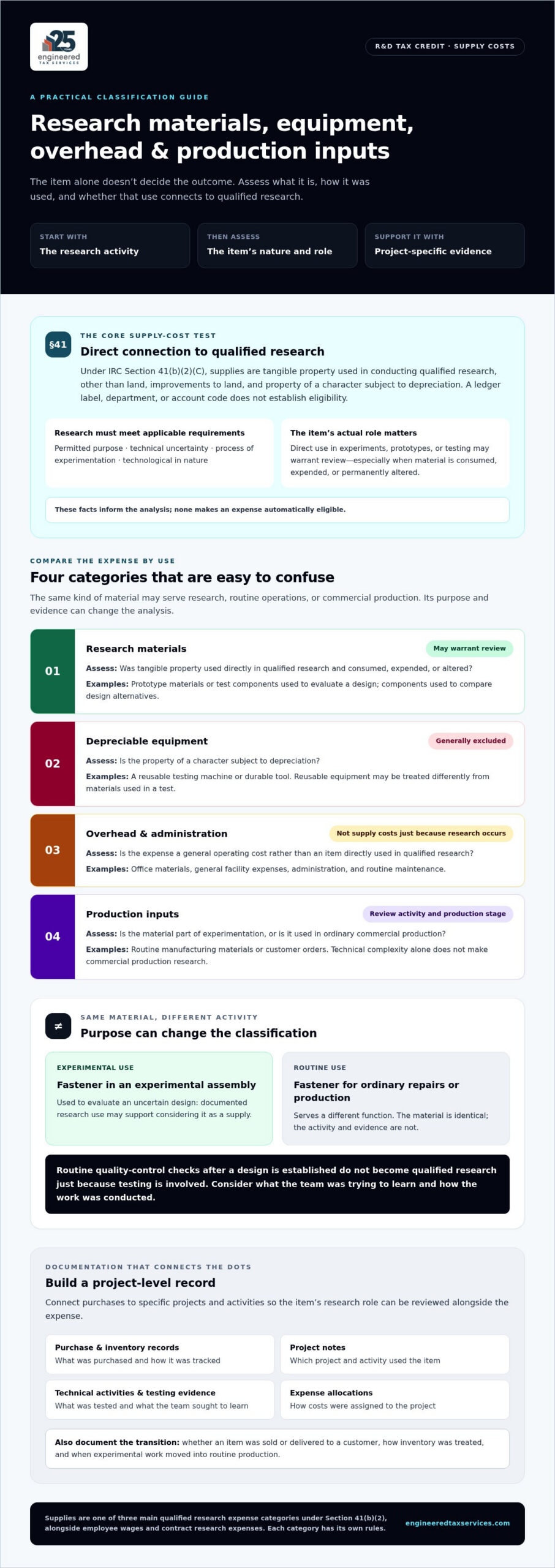
Under Internal Revenue Code Section 41(b)(2)(C), “supplies” are tangible property, other than land or improvements to land and property of a character subject to an allowance for depreciation, used in the conduct of qualified research. In practical terms, an expense merits review only when the item has a direct connection to research that meets the credit’s requirements. Its ledger label, department, or account code does not establish that connection.
Supplies are one of three main categories of qualified research expenses under Section 41(b)(2), alongside employee wages and contract research expenses. Each category has its own rules. A material purchase doesn’t become a supply expense simply because an employee used it, and wages or payments to outside researchers shouldn’t be classified as supplies. The Research and Development Tax Credit offers a general overview, but the statutory language and facts of the research project are central to classifying a specific expense.
The core supply-cost test under Section 41
Start with the activity, not the receipt: was the material used while conducting research that qualifies for the credit? Research must satisfy the applicable requirements, including having a permitted purpose, addressing technical uncertainty, relying on a process of experimentation, and being technological in nature. Then trace the item’s actual role in that work. Tangible items used directly in experiments, prototypes, or testing may warrant review, particularly when they’re consumed, expended, or permanently altered. These facts inform the analysis, but none makes an expense automatically eligible.
Section 41 specifically excludes land and improvements to land, as well as property of a character subject to depreciation. A reusable testing machine, for example, may be treated differently from materials used in a test, depending on the item’s nature and use. Ordinary business use alone is not enough: supplies purchased for administration, routine maintenance, or general operations don’t qualify merely because the company also conducts research.
Why research purpose matters more than the ledger label
Consider the same type of metal fastener purchased for two purposes. If it’s incorporated into an experimental assembly to evaluate an uncertain design, its documented research use may support considering it as a supply. If it’s used for routine repairs or ordinary commercial production, it serves a different function. The material is identical; the activity and evidence are not.
The same distinction applies to testing components. A component used to compare design alternatives during a research project may merit closer analysis than one used in standard quality-control checks after a product design is established. Routine inspection and production activity don’t become qualified research just because they involve testing. Review what the team was trying to learn and how the work was conducted before drawing a conclusion.
Quotable test: “Under IRC Section 41(b)(2)(C), a supply cost is considered for the R&D credit based on its use in qualified research, provided the tangible property isn’t land, an improvement to land, or depreciable property.”
Which research materials qualify, and which expenses fall outside the test?
Classify purchases by both their nature and their role in the project. The same material can be used in experimental work, routine operations, or a commercial product, and those uses may lead to different tax treatment. Use this comparison as a starting point, then assess the specific project facts and applicable rules.
| Expense category | How to assess it | Example |
|---|---|---|
| Research materials | Consider whether tangible items were used directly in qualified research and consumed, expended, or altered. | Prototype materials or test components used to evaluate a design. |
| Depreciable equipment | Generally excluded from supply costs when the property is of a character subject to depreciation. | A reusable testing machine or durable tool. |
| Overhead and administration | Don’t classify general operating expenses as supplies just because research occurs at the facility. | Office materials or general facility expenses. |
| Production inputs | Analyze the activity and production stage; ordinary commercial production isn’t research solely because a product is technically complex. | Materials used for routine manufacturing or customer orders. |
Materials used in prototypes, experiments, and testing
Materials used to build or modify a prototype may warrant review when the work is part of qualified research. The same applies to components consumed while testing alternatives or evaluating a technical design. Calling something a “prototype” doesn’t establish eligibility. Identify what the material was used to test, the uncertainty under investigation, and whether the work meets the research requirements.
Track what happens as experimental work moves toward production. Inventory treatment, whether an item is sold or delivered to a customer, and the transition from testing to routine production can affect the analysis. Record these facts for tax review instead of assuming every unit made during development receives the same treatment.
Equipment, overhead, and other costs that are not supply costs
Statutory distinction: IRC Section 41(b)(2)(C) includes tangible property used in qualified research, but excludes land, improvements to land, and property of a character subject to depreciation. In practical terms, a consumed test material and a reusable depreciable machine fall on different sides of the supply-cost analysis.
Utilities, facility costs, and general administrative expenses shouldn’t be included as supplies without a separate basis under the applicable rules. Payments to outside researchers also aren’t supply costs; contract research is its own qualified expense category, with separate requirements. Keeping categories distinct helps prevent a broad project budget from obscuring which purchases relate directly to research.
For supply costs eligible for R&D tax credit, keep research materials separate from equipment, overhead, and production inputs. An engineering-based R&D tax credit study can help connect technical project activity with expense classification and supporting documentation.
How to classify supply expenses across real research projects
A defensible classification starts with the work, then follows the material. A purchase description alone can’t show whether an item supported qualified research, routine operations, or commercial production. Use a consistent project-level review, and base conclusions on the activity, the item’s actual use, and applicable tax guidance.
- Identify the research activity. Define the business component under development and the technical uncertainty the team sought to resolve. Describe what wasn’t known about the component’s capability, method, or design, and what research steps addressed that uncertainty.
- Trace the material to the work. Match purchase and inventory records to the project, then connect the item to a prototype, experiment, test, or documented iteration. A receipt establishes that a purchase occurred; project records help explain how the material was used.
- Assess its disposition and use. Determine whether the material was consumed, altered, retained for reuse, sold, or diverted to another business purpose. Consider whether its use was limited to research or shared across research and nonresearch activities.
Trace each material to a qualified research activity
Suppose a team is evaluating alternative designs for a business component. Purchase records show that components were acquired, while test plans and engineering notes can show which alternatives they helped evaluate and what results informed later iterations. Together, these records make the connection between the expense and research activity easier to understand.
Track what happened to each item after testing. A material may be consumed during an experiment, incorporated into a prototype, retained for further trials, or reassigned to production. These are distinct facts, not automatic eligibility outcomes. Review them against the project’s research purpose and Section 41 requirements before including an expense.
Resolve mixed-use and production-stage questions
Consider three uses of the same type of component. One may be installed in a prototype to evaluate a design alternative; another may be used for routine quality checks on an established process; a third may go into units made for commercial orders. The labels “prototype,” “testing,” and “production” provide context, but the underlying activity and evidence determine how each use should be analyzed.
Some materials may support both research and nonresearch work. In that case, separate the uses where records allow, and document the basis for any allocation. Project issue logs, material withdrawal records, test quantities, or dated work orders may help explain how an amount was assigned. Don’t apply a broad percentage simply because it seems reasonable; tie the method to evidence and review it under current tax guidance.
The transition from experimentation to routine production also deserves attention. An ongoing engineering project doesn’t make every later production input a research supply. Identify when materials supported the evaluation of unresolved technical alternatives and when they instead supported established operations or customer delivery. If the transition or allocation is unclear, document the relevant facts for tax review.
This disciplined trace from research question to material use helps distinguish supply costs eligible for R&D tax credit from expenses that merely appear near a research project in the accounting system. Keep the conclusion proportionate to the evidence.
What records support an R&D supply-cost claim?
A strong supply-cost record connects three things: what the business purchased, how the material supported research, and how the expense was treated. An invoice can show the purchase, but not whether the item went into an experiment, routine operations, or another use. Build an evidence trail that lets a reviewer follow the expense from the transaction to the technical activity and project.
Build a project-to-purchase evidence trail
Use this workflow to organize the support:
- Identify the project and period. Assign each potential expense to a business component or research project and the relevant time period. Capture the research objective and technical activity in project notes, design records, or engineering documentation.
- Substantiate the purchase. Retain invoices, purchase orders, receiving records, and inventory records. These should identify the item, quantity, purchase date, and transaction details needed to trace it through the accounting system.
- Explain the material’s role. Link the purchase to engineering notes, experiment plans, prototype records, test results, or other contemporaneous evidence. Describe what the material was used for and whether it was consumed, altered, retained, or assigned to another use.
- Reconcile the expense. Trace the purchase to general-ledger entries and show how the amount was treated in the claim calculation. Bookkeeping codes can help organize costs, but a code alone doesn’t establish that an item was used in qualified research.
Evidence-trail test: “A supportable supply-cost analysis links the purchase record to the project, the technical activity, the material’s actual use, and its expense treatment.”
Address allocations, review, and changing tax guidance
When a material serves both research and nonresearch purposes, preserve records that explain the split. Inventory issues, project charge codes, test logs, or other usage records may help support an allocation, depending on the facts. Document the method, the evidence behind it, and any assumptions. Avoid applying an unsupported percentage across unrelated projects.
Before filing, technical and tax reviewers can assess whether the project narrative, purchase support, allocation, and accounting treatment are consistent and complete. Keep documentation created during the work where possible, rather than relying only on later estimates. Filing instructions and reporting requirements can change, so review the guidance applicable to the tax year and return. Records support a claim, but they don’t guarantee that a particular expense will qualify or determine the outcome of an examination.
For supply costs eligible for R&D tax credit, connect the technical account of the research with the financial record of each purchase. An engineering-based R&D tax credit study can help evaluate research activities and associated expenses, with technical documentation supporting the analysis.
Strengthen supply-cost analysis with engineering-led R&D tax credit support
Supply-cost decisions often hinge on technical context that a ledger can’t provide by itself. A materials description may show what was purchased, but not which design uncertainty the team was investigating, how the item contributed to testing, or whether its use shifted as the project progressed. Engineering-led analysis brings those details into view and connects them to expense records.
That connection matters for accuracy and substantiation. Classifying supply costs eligible for R&D tax credit requires more than locating purchases near research activity. It calls for a disciplined review of project facts, technical work, and the materials’ actual use, with conclusions grounded in applicable rules.
Bring technical activity and expense records into one analysis
Review engineering evidence alongside purchasing and accounting data. Project descriptions, test documentation, design iterations, and technical notes can help explain why research was undertaken and how particular materials supported it. Purchase records and expense entries help identify which costs need analysis. Considered together, the evidence can clarify whether an item was used directly in research, shared with other work, or unrelated to the qualified activity.
Project mapping can also reveal inconsistencies. A cost coded to a development project might relate to routine production, while a purchase booked under a general inventory account could have supported documented experimentation. Neither the code nor the department settles the question. A technical review can explain the activity, while a financial review can trace and reconcile the expense. For additional perspective on this approach, see this guide to choosing an R&D tax credit engineering firm.
Clear classification can help a business pursue appropriate tax benefits while maintaining a supportable basis for its treatment. It can also highlight gaps, such as project records that don’t identify material use or accounting entries that lack a clear connection to technical work. Addressing those gaps strengthens the analysis without treating every research-adjacent purchase as eligible.
Explore a structured R&D tax credit study
Engineered Tax Services is an independent, licensed engineering firm serving clients nationally. Its R&D tax credit work includes engineering-based analysis and technical documentation to support claims. A structured study can assess research activities alongside associated expenses, helping connect what teams did to how costs are classified and supported. Conclusions depend on the project facts and current tax requirements.
For organizations seeking a coordinated technical review of research activity and supply-use records, explore an engineering-based R&D tax credit analysis. Careful project analysis supports precise classification and documentation without promising a particular credit or tax outcome.
Turn your supply-cost review into a clear next step
A careful review of supply costs eligible for R&D tax credit can do more than inform a single filing. It can help your team build a repeatable process for connecting technical project work with purchasing and accounting records. That foundation makes future project reviews more consistent and helps decision-makers identify documentation gaps while relevant details are still accessible.
Set a regular point in your project workflow to record how materials are used, especially as work moves from experimentation toward routine production. Pairing that practice with a coordinated technical and tax review can help your business evaluate potential credit opportunities with appropriate substantiation. Eligibility and treatment still depend on the specific facts and applicable requirements, so precision matters more than assumptions.
Engineered Tax Services brings engineering-based analysis to R&D tax credit studies, helping connect research activities with the expenses associated with them. Explore engineering-led R&D tax credit support to take the next step toward a structured, technically grounded review of your research costs.
Frequently Asked Questions
Are prototype materials eligible for the R&D tax credit?
Prototype materials may qualify if they’re used in qualified research and meet the supply-cost requirements. For example, materials used to build a test model to evaluate design alternatives may merit review, while materials for a sales display or customer demonstration may serve a different purpose. Document why the prototype was built, what technical question it addressed, and what happened to its materials afterward. The project’s facts determine the treatment.
Can equipment purchases count as R&D supply costs?
Equipment subject to depreciation generally isn’t a supply cost under IRC Section 41, even if a research team uses it. A reusable testing instrument, for instance, is different from a material consumed during a test. Review the equipment’s tax and accounting treatment rather than relying on its purchase description. If an item’s classification is uncertain, assess its nature and use under current rules before including any amount as a supply expense.
Do materials used in commercial production qualify as research supplies?
Materials used for ordinary commercial production don’t qualify simply because the product originated in an R&D project. Separate materials used to investigate unresolved technical alternatives from inputs used to manufacture established products or fill customer orders. If trial units enter inventory or are sold, record the quantities, dates, and purpose of each use. That information helps reviewers distinguish experimental activity from production and assess the applicable treatment.
Are overhead, utilities, and administrative supplies eligible for the R&D tax credit?
Generally, these costs aren’t supply expenses: utilities are services rather than tangible property, and routine office or administrative purchases aren’t research supplies merely because a research group uses the workspace. Keep facility and administrative costs separate from direct material purchases in project accounting. If an expense may fit another tax category, analyze it under that category’s rules rather than adding it to supplies by default.
What records should a business keep for R&D supply costs?
Keep records that let a reviewer trace an item from purchase through use, such as vendor invoices, receiving documents, inventory issue records, project charge details, and dated test or prototype records. Where possible, retain item or lot identifiers so quantities purchased can be reconciled with quantities issued, consumed, or returned. Note who used the material and for which project. Consistent records can reveal gaps before the claim is prepared.
Are supply costs treated differently from contract research expenses?
Yes. Supplies and contract research are distinct qualified expense categories, so payments to an outside researcher shouldn’t be recorded as supply costs just because the contractor bought or used materials. Keep the agreement, invoices, project descriptions, and payment records together, and separately identify any supplies your business purchased itself. The nature of the expense and the applicable rules for each category determine how amounts are evaluated.
Does a supply cost need to be used entirely for research to qualify?
Not necessarily. If a purchase supports both research and nonresearch work, assess whether the research-use portion can be identified and substantiated under the applicable rules. For example, usage logs may distinguish materials issued to an experiment from units reserved for routine production. Don’t claim the full purchase automatically; document the allocation method, the underlying quantities or usage evidence, and why the treatment reflects the project facts.