Could a commercial HVAC upgrade support an energy-efficient building deduction, accelerated depreciation, or neither? The answer depends on more than the equipment label. Project scope, timing, and technical documentation all matter when evaluating tax deductions for commercial HVAC systems. For Section 179D, timing is especially important: projects that began construction after June 30, 2026, aren’t eligible, while qualifying projects that began by that date may still warrant review.
These tax pathways can be difficult to distinguish. Section 179D focuses on qualifying energy-efficient building improvements, including HVAC, while depreciation rules address how eligible property costs are recovered. A project may call for a closer look at one pathway or both, but eligibility depends on the project facts and applicable rules.
This guide explains the main pathways to evaluate, how project scope and timing can shape the analysis, and which engineering and project records can support a tax review. It also explains how engineering-based tax studies connect building-system details to technical documentation, giving you a practical starting point for coordinating with your tax adviser.
Key Takeaways
- Eligibility for tax deductions for commercial HVAC systems depends on project scope, timing, and applicable tax rules, not equipment efficiency alone.
- Section 179D evaluates qualifying building energy performance, while depreciation addresses how eligible property costs are recovered.
- Assess each potential tax pathway against its own requirements and evidence. One treatment doesn’t automatically replace or combine with another.
- Organize plans, specifications, equipment schedules, invoices, commissioning records, and energy data to support a thorough review.
- Engineering-based analysis can connect building-system facts to technical documentation and help inform a project-specific tax review.
Tax Deductions for Commercial HVAC Systems: Start With the Right Tax Question
A commercial HVAC project can raise more than one tax question, but purchasing efficient equipment doesn’t establish that a deduction or incentive is available. Start with the project’s purpose, the building and systems involved, who owns or uses the property, and when construction or installation occurred. These details help identify which rules to examine and what records can support the review.
For tax deductions for commercial HVAC systems, two pathways are especially relevant: the Section 179D energy-efficient commercial building deduction and depreciation, which may involve cost segregation analysis. They serve different tax purposes and have distinct eligibility requirements. An HVAC purchase doesn’t automatically qualify for either, and evaluating one pathway doesn’t establish eligibility for the other.
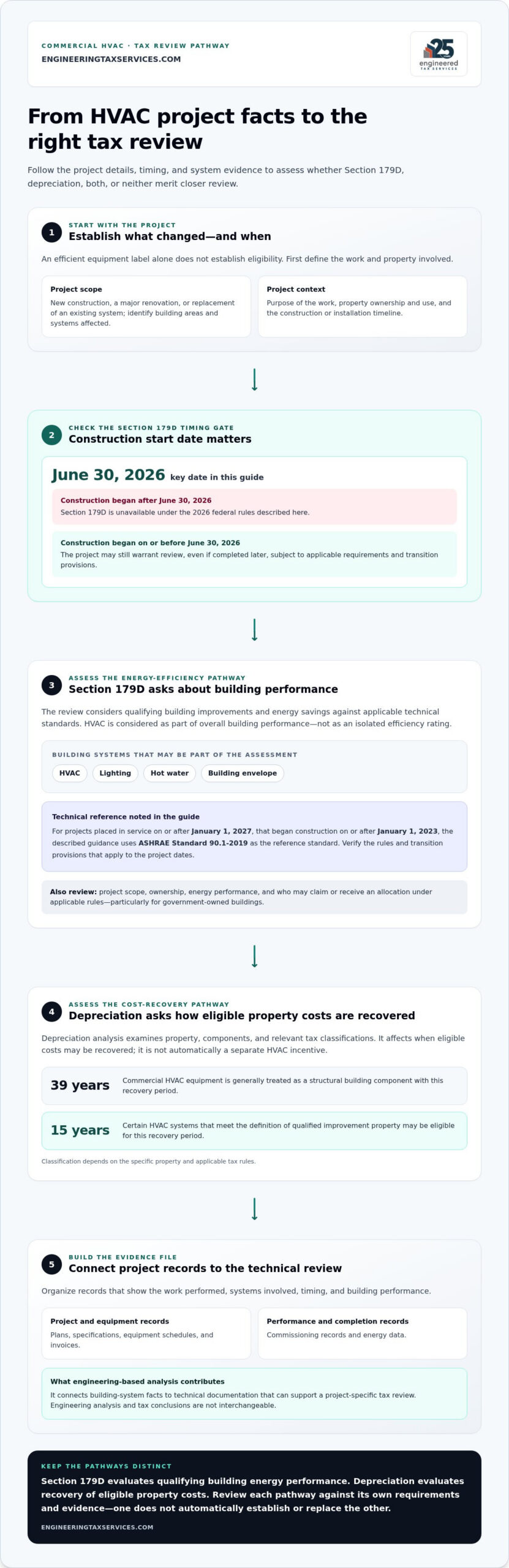
Timing can be decisive. Under the 2026 federal rules reflected in this guide, Section 179D is unavailable for projects whose construction began after June 30, 2026. Projects that began on or before that date may still merit review, even if completed later, subject to applicable requirements and transition provisions. A tax professional should assess the law and project dates that apply to the specific property.
What does a commercial HVAC tax deduction actually reduce?
A deduction generally reduces the amount of income subject to tax; it doesn’t directly subtract the deduction amount from the tax bill. A tax credit, by contrast, is generally applied against tax owed. Depreciation is a method of recovering the cost of eligible property over time. It can affect when deductions are recognized rather than create a separate HVAC incentive.
For example, if a business claims an allowable deduction, its taxable income may be lower than it would have been without that deduction. The resulting tax effect depends on the taxpayer’s circumstances, the amount properly claimed, and applicable law. A deduction isn’t a guaranteed cash benefit, and the project’s engineering characteristics alone don’t determine the final tax result.
Which HVAC projects may prompt a tax review?
New construction, a major renovation, or replacement of an existing system can each warrant an initial tax review. That review looks at the work performed and how it fits into the building, not just whether the new equipment has a higher efficiency rating. Section 179D analysis focuses on qualifying building energy performance under applicable technical rules. Depreciation analysis examines the property and costs under relevant tax classifications.
Scope, ownership, and timing can change the questions to investigate. A project that includes HVAC and other building improvements may require a broader system-level assessment than a standalone equipment purchase. The building owner’s role, the taxpayer claiming a treatment, and any applicable allocation rules can also matter. Repairs, upgrades, or individual equipment items don’t automatically qualify, so keep records that describe the work and property involved.
A practical first step is to establish the project timeline, identify the systems and building areas affected, and gather records showing the work performed. These facts give engineering and tax advisers a stronger basis for distinguishing an energy-efficiency deduction inquiry from a depreciation analysis, then deciding which applicable rules warrant closer review.
How Section 179D and HVAC Depreciation Apply to Commercial Projects
Section 179D and depreciation ask different questions about a commercial HVAC project. Section 179D examines whether qualifying building improvements meet applicable energy-efficiency requirements. Depreciation analysis examines the property, its components, and how their costs may be recovered under tax rules. An engineering study can help establish system facts for either review, but technical analysis and tax conclusions are not interchangeable.
When might Section 179D enter an HVAC project discussion?
HVAC is one part of a building’s overall energy performance, alongside systems such as lighting, hot water, and the building envelope. Section 179D analysis considers qualifying improvements and their energy savings against applicable technical standards. For example, projects placed in service on or after January 1, 2027, that began construction on or after January 1, 2023, use ASHRAE Standard 90.1-2019 as the reference standard under the current guidance described for this article. Verify rules and transition provisions against the project’s dates.
Ownership and allocation can also shape the review. A tax professional needs to establish who may claim or receive an allocation of a potential deduction under the applicable rules, particularly when a building is government-owned. Building energy performance, project scope, and construction timing all matter. An efficient HVAC unit alone doesn’t demonstrate that the building meets the requirements.
How can depreciation analysis relate to HVAC assets?
Commercial HVAC equipment is generally treated as a structural building component with a 39-year recovery period, though specific property may receive a different treatment under applicable rules. Certain HVAC systems that meet the definition of qualified improvement property may be eligible for a 15-year recovery period. Classification depends on the facts and tax law, not simply the equipment’s efficiency rating.
Engineering-based cost segregation identifies and documents property components for tax classification review. This is distinct from Section 179D: cost segregation examines how costs may be classified for depreciation, while Section 179D evaluates qualifying energy performance. A commercial property depreciation guide can provide further context on how asset classification fits into a broader property analysis.
Compare the two pathways:
- Purpose: Section 179D evaluates qualifying building energy performance; depreciation determines how eligible property costs may be recovered.
- Technical evidence: Section 179D may rely on building-system data and energy analysis; depreciation review uses engineering documentation to identify and describe property components.
- Project factors: Both require project-specific facts, but scope, ownership, placed-in-service timing, and applicable rules affect each analysis differently.
- Professional review: Engineering findings support the technical record. A tax professional evaluates the treatment, applicable law, and how the pathways interact for the taxpayer.
One pathway doesn’t automatically replace or combine with the other. A project may warrant evaluation under both, but each must be assessed independently and consistently with current law. Engineering-based tax studies can connect building-system facts to technical documentation for Section 179D and depreciation review, without presuming eligibility or a particular tax outcome.
Section 179D or Depreciation? Compare the HVAC Tax Paths Before Deciding
These pathways address different aspects of a commercial project, so choosing between them isn’t simply a matter of selecting the larger deduction. Section 179D evaluates whether qualifying building improvements meet energy-performance requirements. Depreciation analysis examines property and eligible costs under applicable recovery rules. A project may warrant review under both, but that doesn’t mean the treatments can automatically be combined or claimed for the same costs. A tax professional should review the consequences and coordination under current law.
Compare the pathways by the questions each one asks:
- Purpose: Section 179D assesses qualifying building energy performance. Depreciation determines how the cost of eligible property may be recovered.
- Qualifying conditions: Section 179D depends on statutory requirements and technical energy analysis. Depreciation depends on the property’s classification and the rules applicable to the taxpayer and asset.
- Evidence: Section 179D review may require building plans, system specifications, and energy-performance information. Depreciation review may use cost records and engineering details that identify property components.
- Timing: Section 179D eligibility can turn on when construction began and other project dates. Depreciation treatment can depend on when eligible property was acquired or placed in service, as well as the law then in effect.
- Professional review: Engineering analysis supports the technical facts; a tax professional evaluates eligibility, allocation, reporting, and potential interactions.
Which project facts help distinguish the available approaches?
Start by identifying the project type and property involved. New construction may prompt a whole-building efficiency review, while a renovation or equipment replacement calls for a closer definition of the improvements and affected systems. For an acquired property, cost segregation may help evaluate how its assets and components are classified. Acquisition alone doesn’t establish an energy-efficiency deduction.
Then assemble information about the building’s energy performance, HVAC scope, ownership and taxpayer, acquisition and construction dates, and placed-in-service date. These facts help advisers assess which rules may apply, whether allocation questions arise, and how tax treatments should be coordinated. An equipment schedule or efficiency rating alone can’t answer all of those questions.
Why do project dates and current law matter?
For 2026, Section 179D is unavailable for projects whose construction began after June 30, 2026. Projects that began by that date may still merit review, subject to applicable requirements and transition rules. Depreciation also has date-sensitive provisions: 100% bonus depreciation applies to qualifying assets placed in service after January 19, 2025, but commercial HVAC systems generally remain 39-year real property. An HVAC label alone doesn’t make an asset eligible for bonus depreciation.
Before reaching a conclusion, verify enacted law, effective dates, transition provisions, and current IRS guidance against the project’s specific facts. Section 179D’s technical standards and any applicable allocation rules also need current review. Equipment efficiency and tax eligibility are related, but separate questions. A careful comparison of tax deductions for commercial HVAC systems starts with documented project facts, not an assumption that one pathway fits every building.
Build a Defensible HVAC Tax Review With the Right Project Records
A strong tax review begins with a clear account of what changed, where the work occurred, and when the project reached key milestones. Engineering records can connect those facts to the building’s systems and support technical analysis. They don’t, by themselves, establish eligibility or determine tax treatment. Keep project evidence organized separately from the tax conclusions your advisers reach.
What records should owners assemble for an HVAC project?
Collect records from the planning, construction, and operating stages, not just the final invoice. Documents that clearly describe the installed systems and work performed make it easier to assess project scope and identify gaps. Include ownership and allocation details for professional review, particularly if someone other than the property owner may be involved in claiming a deduction.
- Define the project: Record whether the work involved new construction, a renovation, equipment replacement, or multiple phases. Note the affected areas and systems.
- Establish the timeline: Gather construction and renovation dates, acquisition records where relevant, and the date the system or property was placed in service.
- Document the design and installation: Assemble building plans, specifications, equipment schedules, invoices, and records describing changes from the original design.
- Collect performance evidence: Include commissioning information, operating data, energy-model documentation, and available energy-use records related to the project.
- Prepare for tax review: Identify the property owner, potential taxpayer, and any allocation arrangements, then have a qualified tax adviser evaluate the treatment under applicable law.
Quick checklist:
- Project facts: Scope, building areas, construction dates, plans, specifications, equipment, invoices, commissioning, energy data, ownership, and placed-in-service date.
- Tax conclusions for adviser review: Whether Section 179D requirements are met, how assets are classified for depreciation, who may claim or receive an allocation, and how proposed treatments interact.
How does an engineering-based study support the review?
An engineering-based study examines building systems and available project evidence to organize technical findings, calculations, and supporting documentation. For depreciation analysis, cost segregation can help identify property components for tax classification review. A cost segregation analysis for commercial property can be relevant when the project includes assets whose classification warrants closer examination. The study supports the factual record; it doesn’t guarantee a particular tax result.
Keep a traceable connection between each conclusion and its supporting source. Equipment schedules can identify system components, while plans and invoices help show their location and project scope. If records conflict or a document is missing, flag the gap rather than treating an assumption as established fact. This helps engineering and tax professionals assess the evidence carefully.
For a technically grounded review of tax deductions for commercial HVAC systems, bring the project records together with engineering analysis and tax-professional review. Explore engineering-based tax study support for the technical documentation your project review may require.
Evaluate Your Commercial HVAC Tax Opportunity With Engineering-Based Analysis
Evaluating a potential tax pathway takes more than a list of equipment purchases. The project’s technical facts must be connected to applicable requirements and documented clearly. Engineering-based tax studies can help assess whether a commercial HVAC project warrants a Section 179D energy-efficiency review, a cost segregation analysis, or consideration of both. The findings inform the tax review; they don’t guarantee eligibility, deductions, or savings.
What does an ETS engineering-based tax study contribute?
Engineered Tax Services (ETS) conducts technical reviews of building systems and property components, then prepares documentation to support evaluation of potential tax treatment. For HVAC projects, this work can organize relevant system and project facts for a Section 179D or cost segregation study. Founded in 2001, ETS conducts more than 10,000 tax studies annually across the United States.
An engineering report supports the technical record, while the taxpayer’s tax adviser evaluates how the findings apply to the taxpayer, project dates, and current law. Engineering analysis can explain what was built, installed, or improved, but it doesn’t replace taxpayer-specific tax advice or determine how a return should be prepared. Coordinating both disciplines helps keep technical evidence and tax conclusions aligned.
What is a practical next step for building owners?
Prepare a concise project summary before beginning a review. Include the building type and ownership, whether the work involved new construction, renovation, or replacement, the systems and areas affected, and key construction and placed-in-service dates. Gather available plans, specifications, equipment schedules, invoices, commissioning information, and energy records. Note missing or inconsistent documents so they can be addressed rather than treated as established facts.
This package gives engineering and tax professionals a practical starting point. An engineering study can connect project documentation to the technical questions under review, while the taxpayer’s adviser considers applicable eligibility rules, allocation, reporting, and the interaction of potential treatments. This coordinated process is useful when evaluating tax deductions for commercial HVAC systems, because no equipment label or isolated document can resolve every project-specific tax question.
- Share: Building type, ownership, work scope, and project timeline.
- Organize: Available design, installation, commissioning, and energy records.
- Coordinate: Engineering findings with tax advice before adopting a filing position.
For a project-specific technical review, discuss your commercial building and available records with ETS. Discuss an engineering-based tax study with ETS to evaluate the relevant project facts and documentation alongside your tax adviser.
Make Tax Review Part of Your Next HVAC Decision
The strongest opportunity to evaluate tax deductions for commercial HVAC systems may begin before a project is complete. Bringing technical and tax perspectives into capital planning can help decision-makers identify which project details to track and preserve, rather than reconstructing them later. It also creates a clearer basis for weighing potential tax treatment alongside operational priorities.
For an upcoming installation or a completed project that hasn’t received a technical tax review, align engineering analysis with your tax adviser’s review before adopting a filing position. The goal is not to assume a benefit, but to determine whether the facts support further consideration and what documentation the decision requires.
Engineered Tax Services brings engineering expertise to Section 179D and cost segregation studies, connecting building and property facts with technical documentation for tax evaluation. A well-supported review can help you move forward with greater clarity.
Frequently Asked Questions
Can commercial HVAC equipment qualify for a federal tax deduction?
Yes, some commercial HVAC projects may warrant review under Section 179D or depreciation rules, but buying efficient equipment alone doesn’t establish eligibility. A replacement system, for example, needs to be considered in the context of the building and the full project scope. Tax deductions for commercial HVAC systems depend on factors such as technical performance, ownership, timing, current law, and taxpayer-specific circumstances. Engineering and tax review can assess the facts without guaranteeing a deduction or savings.
What is the difference between a commercial HVAC tax deduction and a tax credit?
A deduction generally reduces taxable income, while a credit generally reduces tax liability. Section 179D is a deduction, not a credit. Neither mechanism automatically applies just because a business buys or installs HVAC equipment. Before estimating a project’s potential tax value, identify which tax treatment is under consideration and how its rules apply to the taxpayer. The ultimate effect depends on applicable law and individual tax circumstances.
Does replacing a commercial HVAC system automatically qualify for Section 179D?
No. Replacing a system by itself doesn’t establish Section 179D eligibility. A review may need to consider the building and covered systems, energy performance, technical standards, project dates, and other statutory requirements. A replacement that appears efficient on its own doesn’t answer whether the relevant building-level criteria are met. Verify current 2026 law and transition rules against the specific project facts before reaching a conclusion.
Can a business use Section 179D and depreciation analysis for the same HVAC project?
Both pathways may be relevant to reviewing a project, but their interaction depends on applicable tax rules and project-specific facts. They don’t automatically combine, and one doesn’t necessarily exclude the other. A review may need to distinguish building improvements considered for energy performance from assets analyzed for depreciation. Coordinate engineering and tax review of asset scope, ownership, timing, and any required adjustments before adopting a tax position.
What documentation supports a commercial HVAC tax review?
Useful starting records include plans, specifications, equipment schedules, project dates, invoices, commissioning information, energy data, and ownership records. Keep versions that show both the original design and changes made during construction, if available, so reviewers can understand what was installed. Engineering calculations and reports may support technical analysis, but records alone don’t guarantee qualification. The evidence needed depends on the tax pathway and applicable rules, so organize the file for professional review.
Do 2026 tax law changes affect deductions for commercial HVAC systems?
Yes, statutory amendments, effective dates, and transition provisions can affect commercial building incentives and depreciation treatment. For a project reviewed in 2026, verify enacted federal law, current IRS guidance, and the project’s relevant dates before relying on a tax conclusion. Older summaries may not reflect rules applicable to a commercial building or a particular project timeline. Confirm the authority and its application with qualified tax advisers before filing a position.
Is Section 179D a tax credit for commercial HVAC upgrades?
No. Section 179D is a federal deduction associated with qualifying energy-efficient commercial buildings, not a tax credit. HVAC may be included in a broader building-system analysis, but purchasing equipment doesn’t prove that the building meets the requirements. Technical criteria, ownership, project timing, and current law all matter. Keep the distinction clear when discussing potential value: a deduction affects taxable income, while credits operate under separate provisions and rules.